Box Breathing vs 4-7-8: Which One Should You Use?
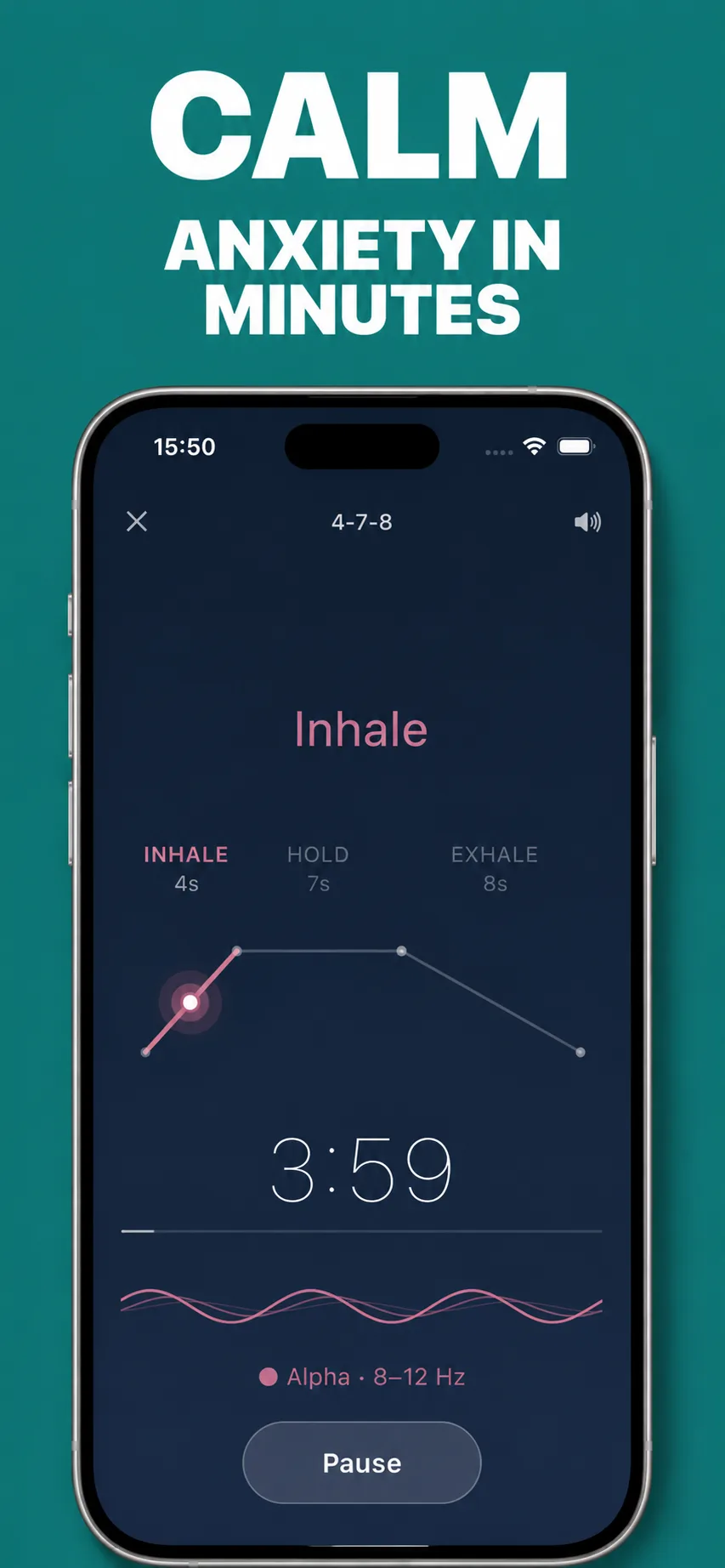
Use box breathing (4-4-4-4, equal counts) when you need to stay calm and sharp — before a meeting, exam or difficult conversation. Use 4-7-8 breathing (inhale 4, hold 7, exhale 8) when you want to wind down — for anxiety spikes and falling asleep. The difference is the exhale: box breathing is balanced and keeps you alert, while 4-7-8's long exhale actively sedates the nervous system.
Box breathing and 4-7-8 are the two most-searched breathing techniques in the world, and people constantly ask which one they should learn. The honest answer: they're built for different moments. One is a stabiliser, the other is an off-switch.
The two patterns, side by side
| Box breathing | 4-7-8 breathing | |
|---|---|---|
| Pattern | Inhale 4 · Hold 4 · Exhale 4 · Hold 4 | Inhale 4 · Hold 7 · Exhale 8 |
| Shape | Perfectly balanced | Weighted to the exhale |
| Effect | Calm and alert | Calm and drowsy |
| Best moment | Before pressure: meetings, exams, performance | After hours: anxiety spikes, bedtime |
| Discreetness | Invisible — usable mid-conversation | Needs privacy (mouth exhale, long counts) |
| Beginner-friendliness | Easiest pattern there is | The 7-second hold takes practice |
The whole difference lives in the exhale. Box breathing's equal counts balance the two branches of your nervous system, which is why it leaves you steady but sharp — the reason it's the standard reset drill in high-stakes professions. 4-7-8 doubles the exhale relative to the inhale, and a long exhale is the strongest "stand down" signal you can send your body. It doesn't just calm you; it makes you sleepy. That's a feature at 11pm and a bug at 11am.
When box breathing is the right call
Reach for box breathing when you need to perform in the next five minutes: a presentation, an exam, a hard conversation, a moment of overwhelm at your desk. Two to three minutes is enough, nobody can tell you're doing it, and the single repeated count is easy to hold onto even when your mind is racing.
It's also the better daily default at work. Because it doesn't sedate you, you can use it between meetings without losing your edge — the breathing for focus guide covers where it fits in a workday.
When 4-7-8 is the right call
Reach for 4-7-8 when the goal is to come down: an anxiety spiral in the evening, a racing mind in bed, the 3 a.m. wake-up. Four to eight cycles lying down, eyes closed, and most people feel the drowsiness arrive on schedule. The breathing for sleep guide has a full wind-down routine built around it.
One caveat: the seven-second hold is genuinely hard at first. If it makes you tense, keep the ratio and shrink the numbers (2–3.5–4), or start with the no-hold 4-6 relaxation pattern and graduate later.
The honest recommendation
Don't pick one — assign them. Box breathing owns your daytime; 4-7-8 owns your night. Learn box breathing first because it's easier, then add 4-7-8 once holds feel comfortable. Both take under a week of daily practice to feel natural, and they cover about 80% of the moments a breathing technique can help with.
If you'd rather not count at all, Inhale guides both — the animation and sound keep the timing, so you just breathe.
FAQ
Can I do both box breathing and 4-7-8 in the same day?+
Yes — they don't conflict. A common pattern is box breathing during the workday for resets, and 4-7-8 at night in bed. Think of them as two tools on the same shelf.
Which is better for anxiety: box breathing or 4-7-8?+
For an acute anxiety spike when you're somewhere private, 4-7-8 works faster because of the long exhale. In public — a meeting, a queue, a conversation — box breathing wins because it's silent, invisible and easy to remember under stress.
Is one easier for beginners?+
Box breathing is the easier entry point: one number, four equal phases. If 4-7-8's seven-second hold feels like a strain, do box breathing for a week first, or use the gentler 4-6 relaxation pattern as a stepping stone.